







Frequently Asked Questions
Get answers to commonly asked questions.
Who should use Vaultody’s Wallet-as-a-Service solution?
Vaultody WaaS is designed for fintech platforms, exchanges, Web3 ecosystems, and digital product companies that want to offer secure, scalable digital wallets to end users without becoming custodians themselves. It is best suited for organizations that need to support large user bases, multi-chain assets, and embedded wallet experiences while ensuring that end users retain full ownership and control of their private keys under a true self-custody model.
How does Wallet-as-a-Service differ from Organization Wallets and Treasury Management?
Wallet-as-a-Service is designed for platforms that want to enable end-user self-custody at scale, where each user is the custodian of their own assets and the organization provides wallet infrastructure only. Organization Wallets is built for enterprises that act as custodians for their customers, managing assets through segregated accounts and automated governance, while Treasury Management is intended for organizations safeguarding and operating their own corporate digital assets. Unlike traditional enterprise wallets that centralize key control, WaaS uses MPC to distribute key shares across user-controlled and secure components, ensuring the platform operator cannot independently authorize transactions while still maintaining enterprise-level visibility and operational oversight.
How does Vaultody’s MPC wallet infrastructure secure end-user assets at scale without assuming custody?
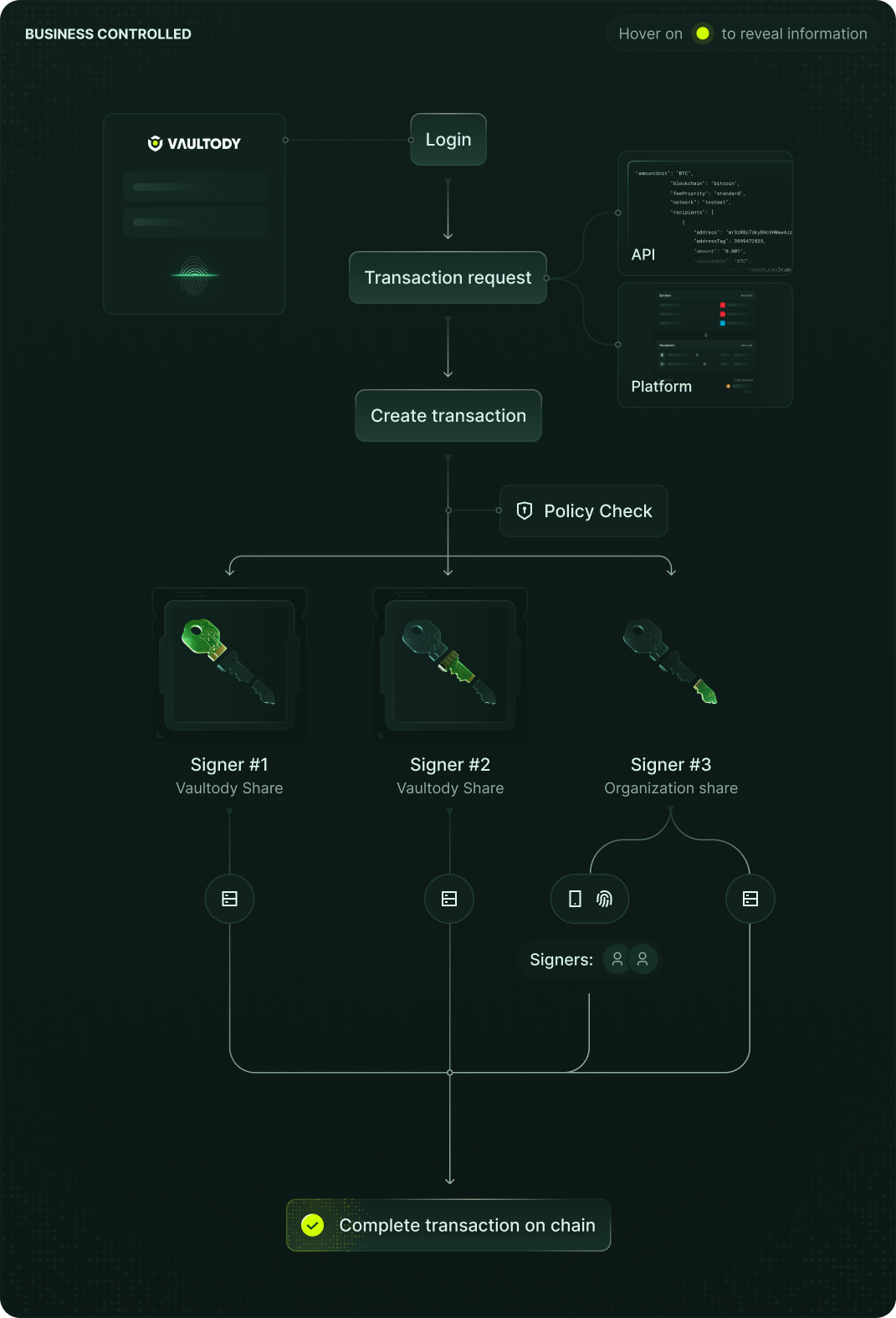
Vaultody WaaS applies MPC threshold signing so private keys are never reconstructed or held by Vaultody or the platform operator, ensuring the infrastructure provider cannot access or move user assets. Key shares are distributed across user devices and secure components, and transactions require threshold approval based on predefined policies, eliminating single points of compromise while supporting large-scale, multi-chain operations. Governance and recovery workflows are implemented at the infrastructure level to enable controlled recovery and oversight without transferring custody or key authority away from end users.
How does WaaS integrate into existing applications and product ecosystems?
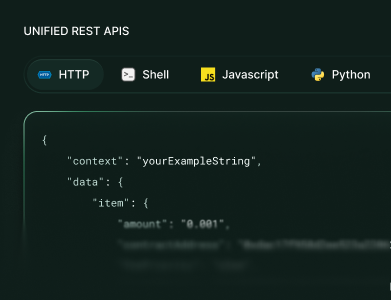
WaaS is delivered through developer-focused APIs, SDKs, and an onboarding widget that allow teams to embed MPC wallets directly into fintech apps, Web3 platforms, marketplaces, or loyalty systems. The infrastructure supports rapid deployment across multiple blockchains using unified interfaces, enabling teams to launch wallet functionality with minimal engineering overhead while maintaining full control over user experience, branding, and backend orchestration.
How does Vaultody WaaS support enterprise monitoring, compliance, and operational oversight?
While end users retain custody, Vaultody provides enterprises with real-time dashboards that offer visibility into wallet creation, transaction activity, chain-level operations, and system health. Automated alerts, detailed logs, and audit-ready reporting help organizations meet internal governance and regulatory expectations without accessing user keys or assets, making WaaS suitable for large-scale, compliance-conscious deployments.